AI/MLPropTechWeb + MobileDesign System
Trythat.ai
AI-powered property intelligence platform
Scroll
TheProblem
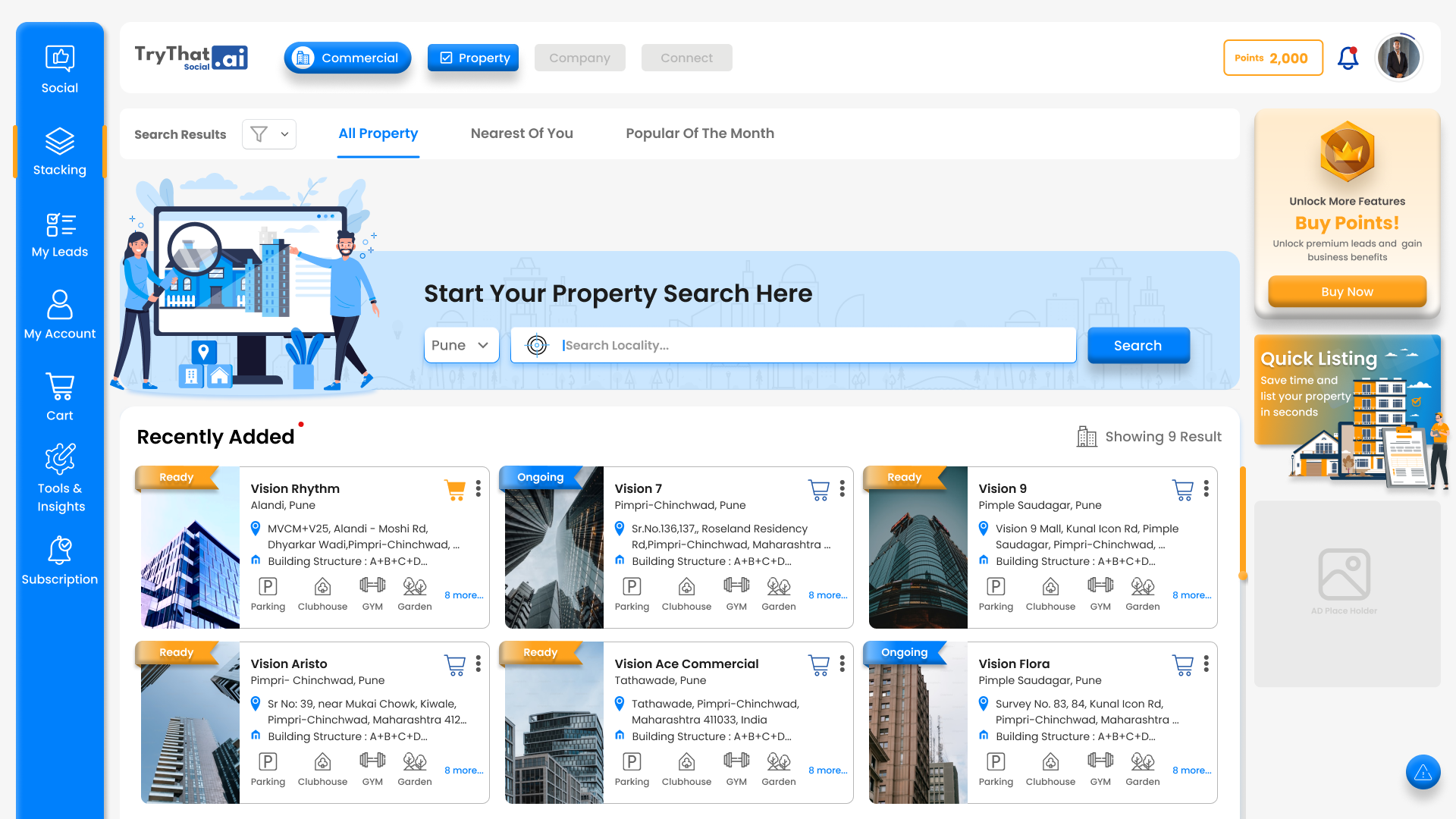
Trythat.ai was India's first platform to combine property listings with AI-driven data insights. Strong proposition, but it was buried under a cluttered, e-commerce-style UI. Users couldn't find features they needed, the information hierarchy was broken, and the UX copy left people confused. Powerful capabilities, poor discoverability.
Users consistently reported the app was "not easy to use". Key features were hidden behind confusing navigation
Information architecture was broken: property listings, data insights, and AI tools were siloed with no clear flow between them
UX copy was unclear and inconsistent, leaving users guessing what actions would do
The legacy blue-and-orange interface looked dated and e-commerce-generic, undermining trust in an AI-first product
02
TheTransformation
This wasn't a reskin. The original platform treated listings and data insights as separate products stitched together, and we identified that the real value was in connecting them through a conversational AI layer.
Before

The original e-commerce-style interface. Cluttered navigation, siloed features, and a visual language that didn't match an AI product.
The Insight
“Users weren't browsing. They were searching with specific criteria. A chat-first interface serves both exploration and precision better than a filter panel.”
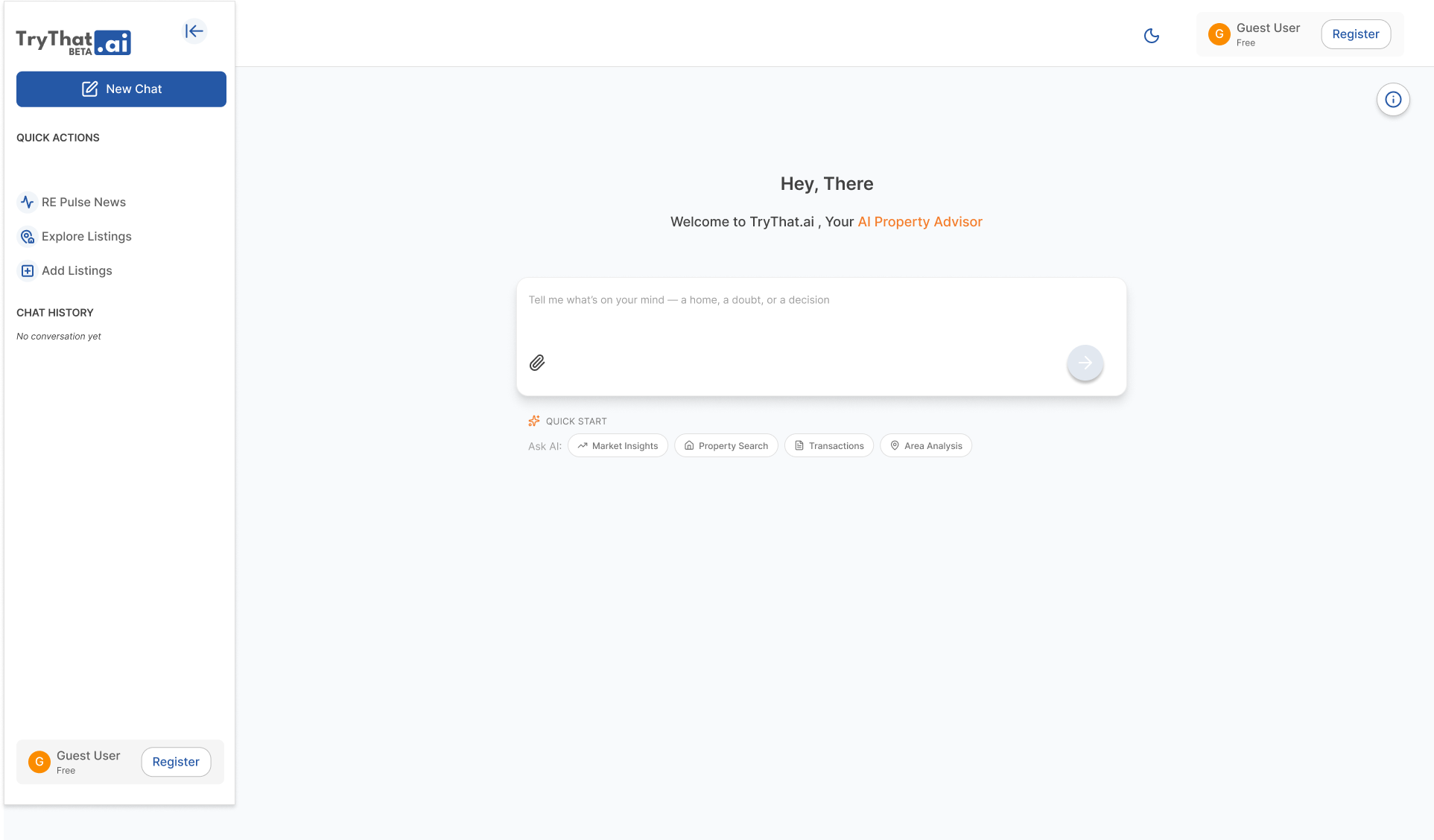
New Direction

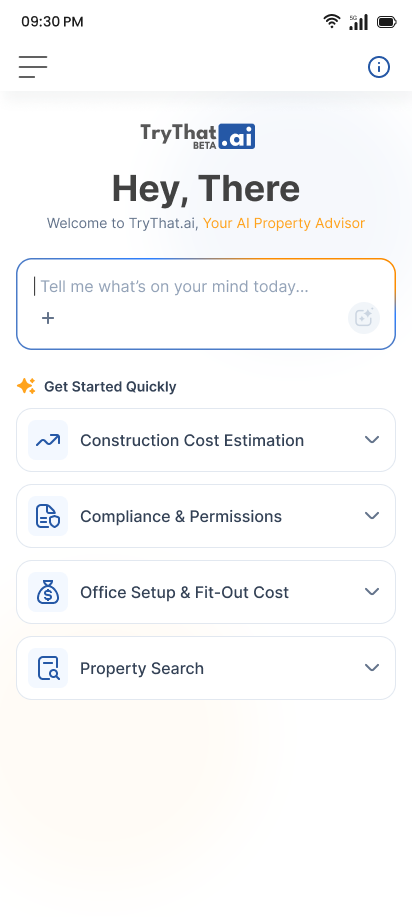
The redesigned chat-first interface. AI property advisor as the primary interaction model, with structured data surfaced inline as part of the conversation.
Research & Discovery
No dedicated research budget, so I used what was available. The sales team had months of direct user feedback: complaints, feature requests, drop-off patterns. I synthesized this alongside stakeholder interviews to map the real friction points. In parallel, I ran a competitive analysis of 99acres, IndExTap, and MagicBricks to understand market patterns and find where Trythat.ai could stand out through design.
01
Synthesized 6 months of sales team feedback into a pain point matrix, categorized by severity and frequency
02
Stakeholder interviews across product, engineering, and business teams to align on vision and constraints
03
Competitive audit of 99acres, IndExTap, and MagicBricks. Mapped feature parity, UX patterns, and gaps
04
Found the key differentiator: no competitor combined property listings with data insights in one experience
Design Exploration
The core challenge was merging two different interaction models: browsing property listings (visual, exploratory) and analyzing data insights (structured, analytical). I explored multiple information architectures before landing on a chat-first approach where the AI assistant bridges these modes, letting users move naturally from discovery to analysis.
Process sketch

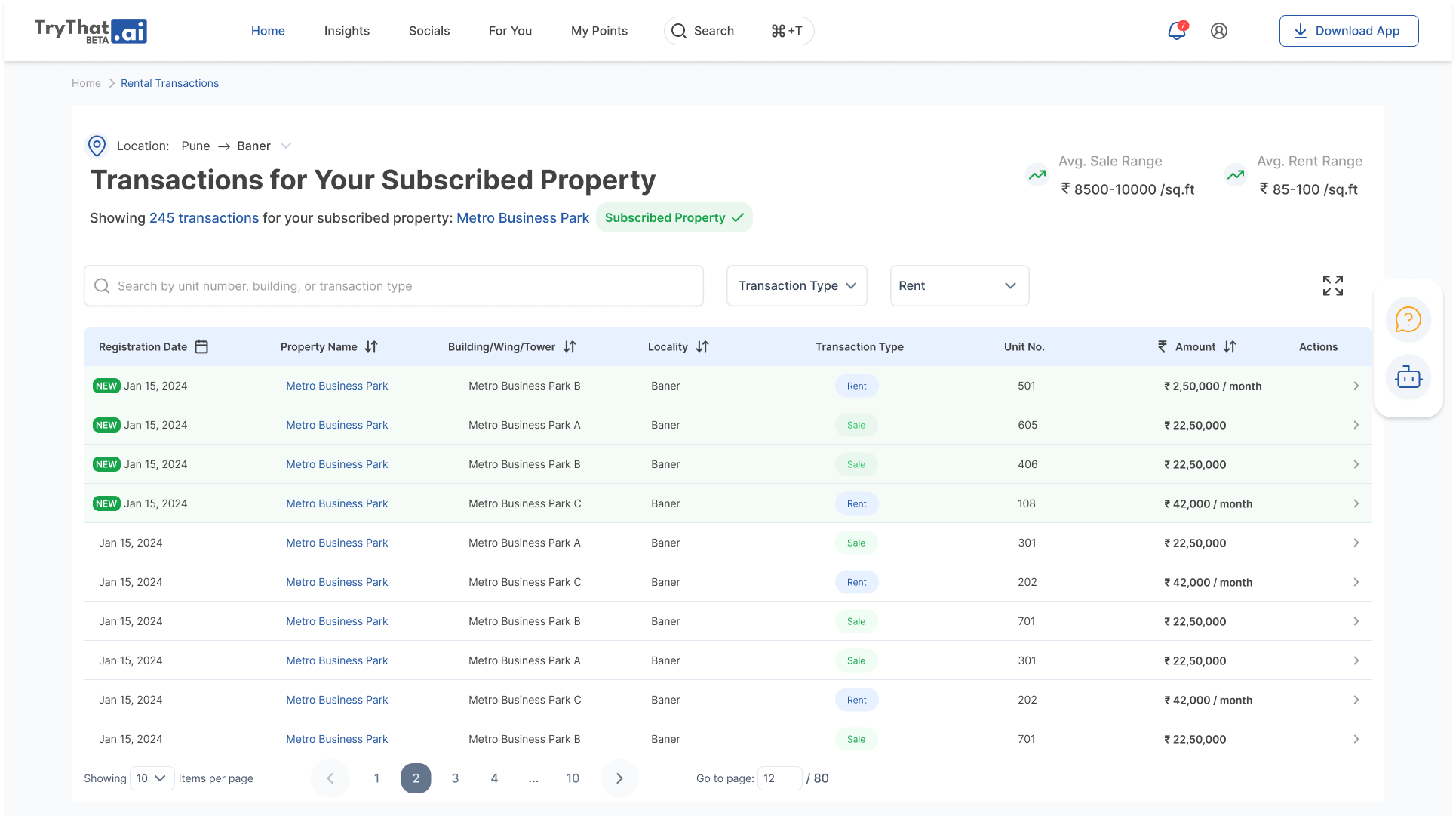
Early ideation sketch for the Property Transaction table: filter panel, data columns, ownership detail drawer, and location selector flow. Dated 19.12.04.
Lo-fi screens · 2 step journey
01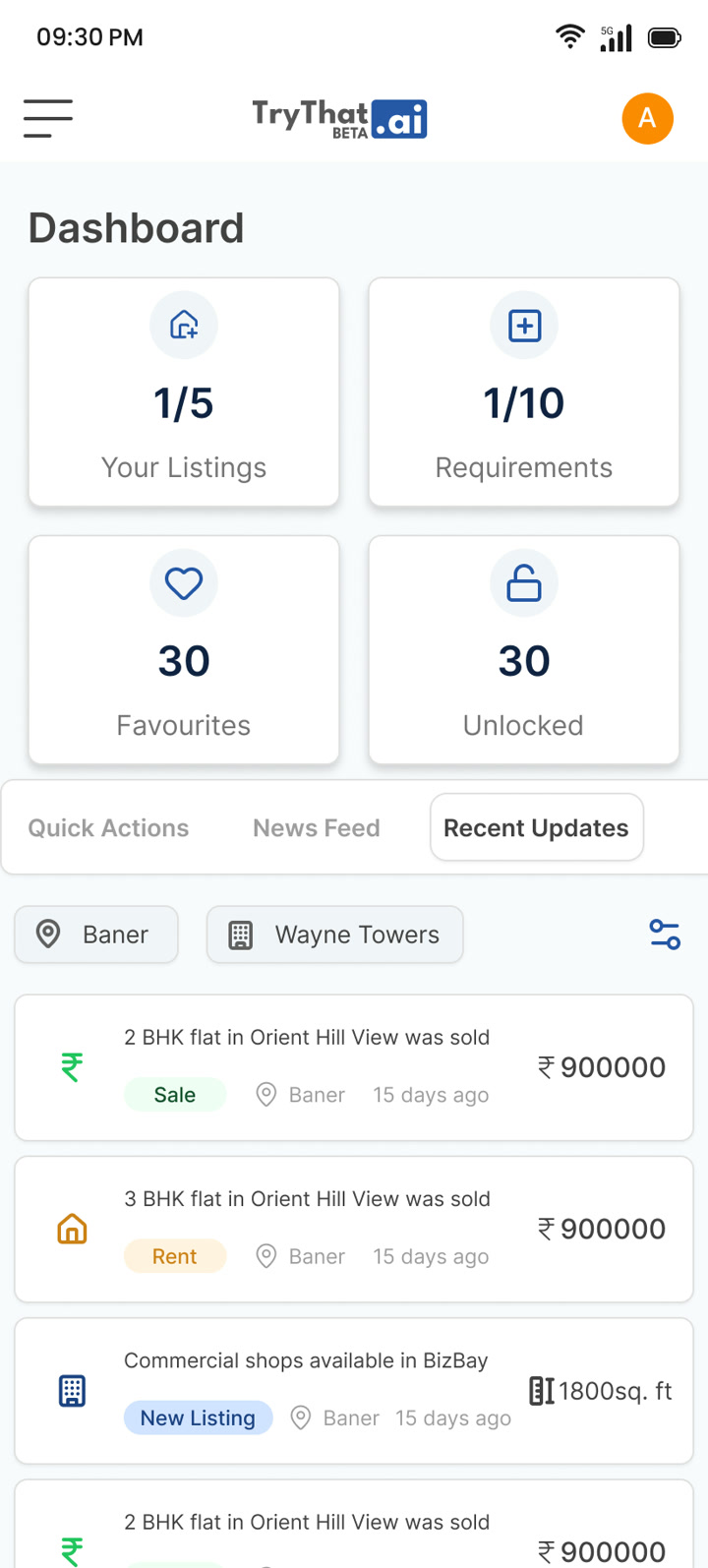
02
05
TheSolution
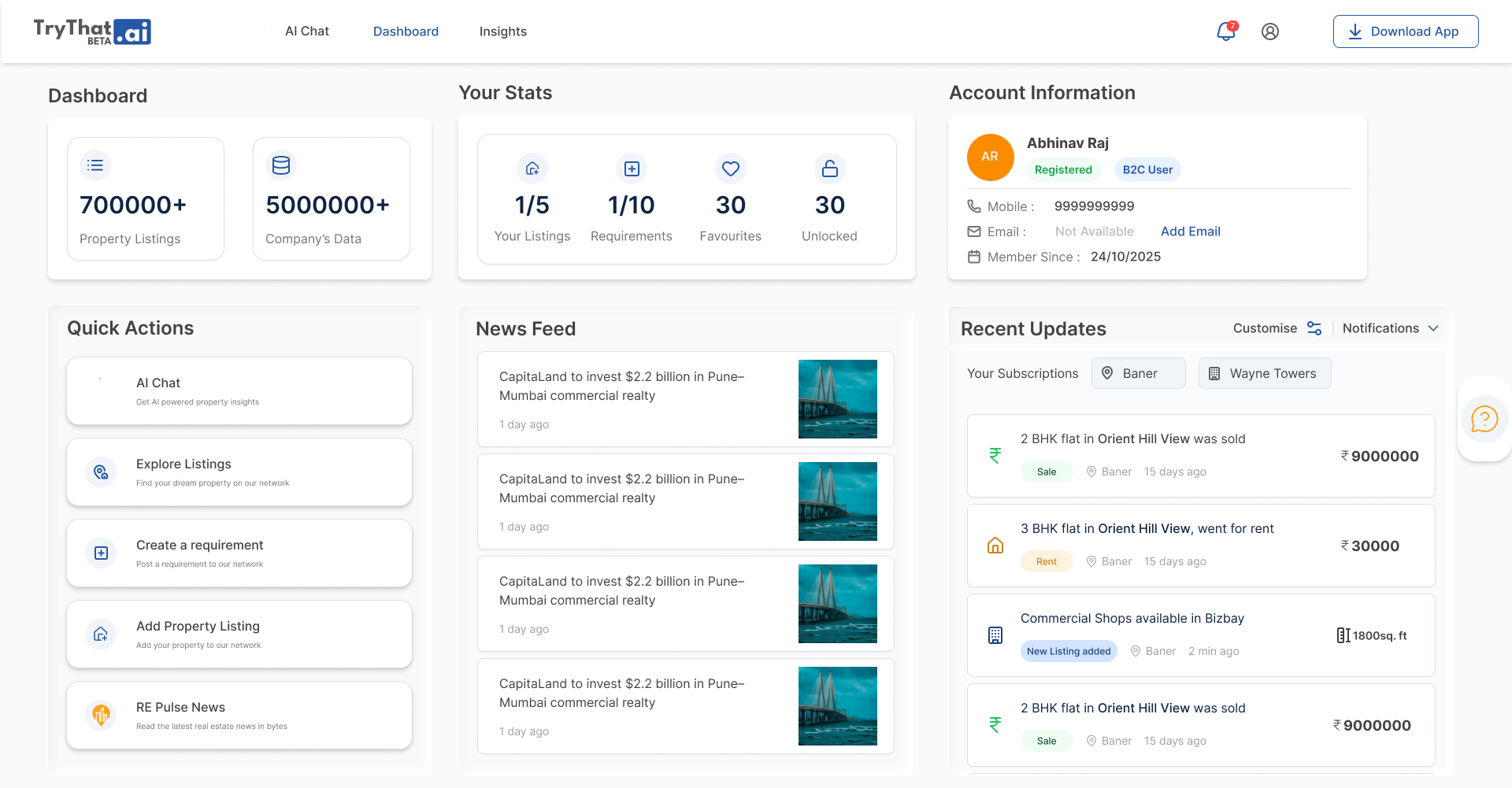
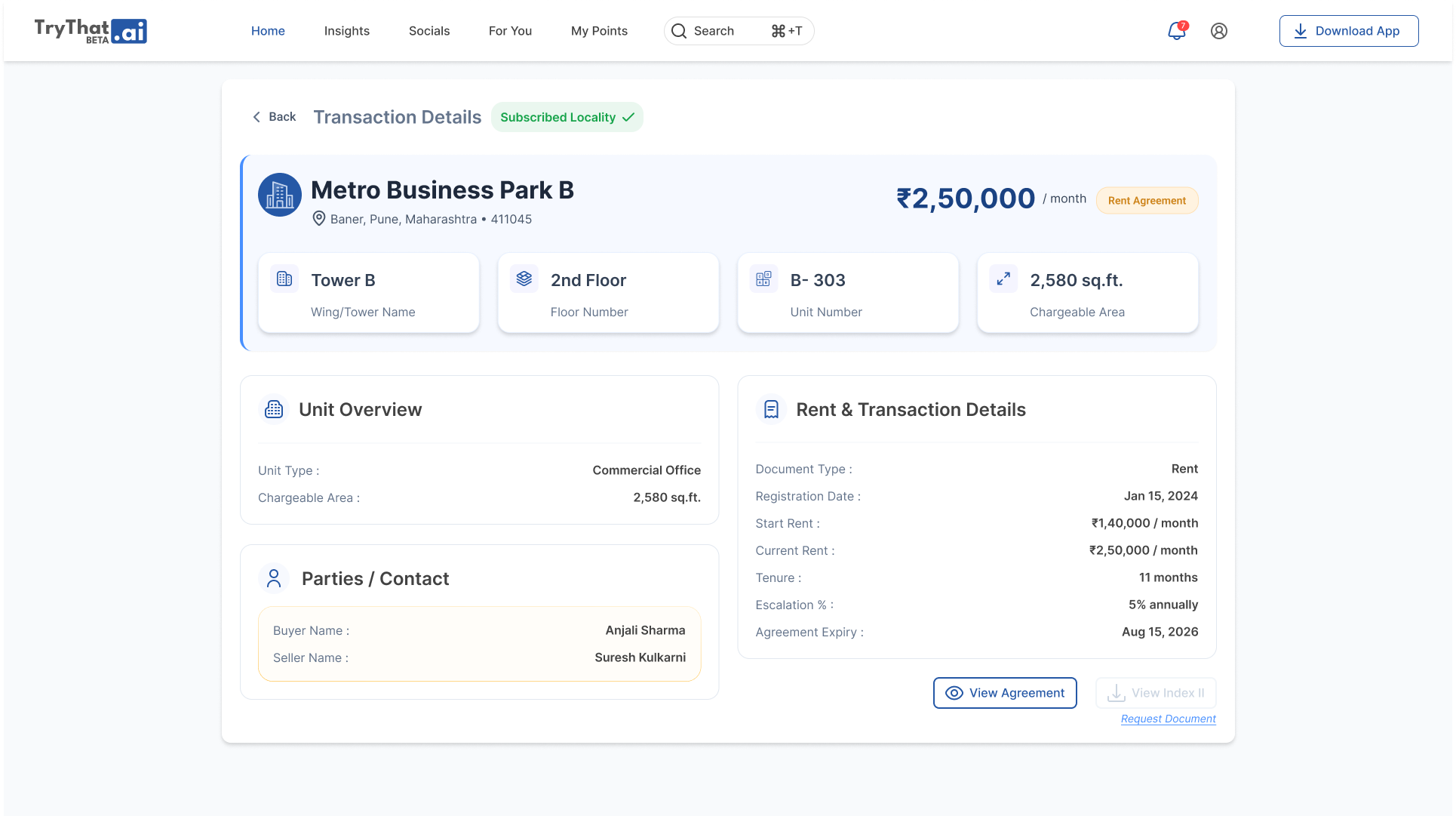
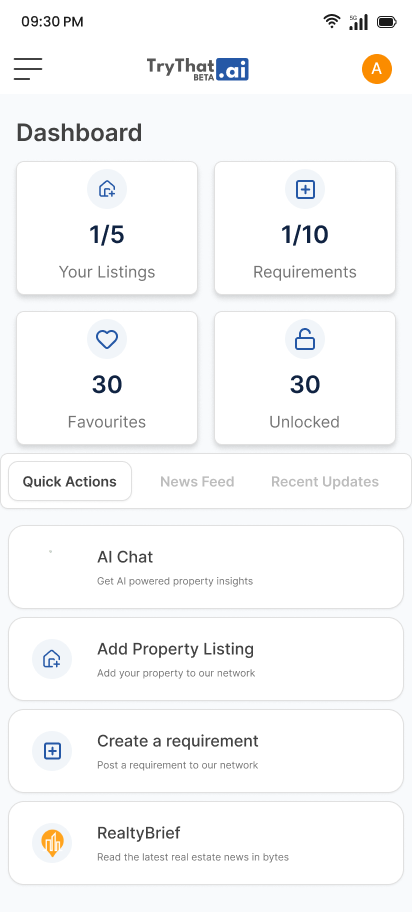
The redesign put a chat-first AI interface at the centre. Instead of forcing users through traditional navigation, the AI property advisor surfaces relevant listings, data insights, and market trends through conversational queries. The web platform was rebuilt with a clean, spatial design language, light-mode first, with clear data visualization for property analytics and transaction details. I also designed the mobile app (React Native) from scratch for Play Store and App Store, keeping feature parity while adapting interactions for touch.
Mobile Experience

Feature Deep Dive
Voice-FirstPropertyListing
The traditional property listing flow required users to fill 7+ form fields manually: building name, area, price, location, amenities. Drop-off rates were high and the experience felt like paperwork. I designed a voice-first alternative: speak naturally for 30-60 seconds, and AI extracts every structured field from your voice note. No forms, no typing, no friction. It turned a 5-minute chore into a 1-minute conversation.
- Users speak naturally. AI parses building name, property type, area, pricing, location, and amenities from free-form speech
- Real-time transcription with a live field checklist shows what's been captured as the user speaks
- Handles incomplete recordings gracefully. Shows exactly which fields are missing (4 of 7 captured) with the option to record again or fill manually
- Confidence scoring per field ensures data quality without interrupting the voice flow
- Post-submission upsell: prompts to add photos (+500% views) and detailed amenities to boost listing visibility
User flow — 6 steps
1
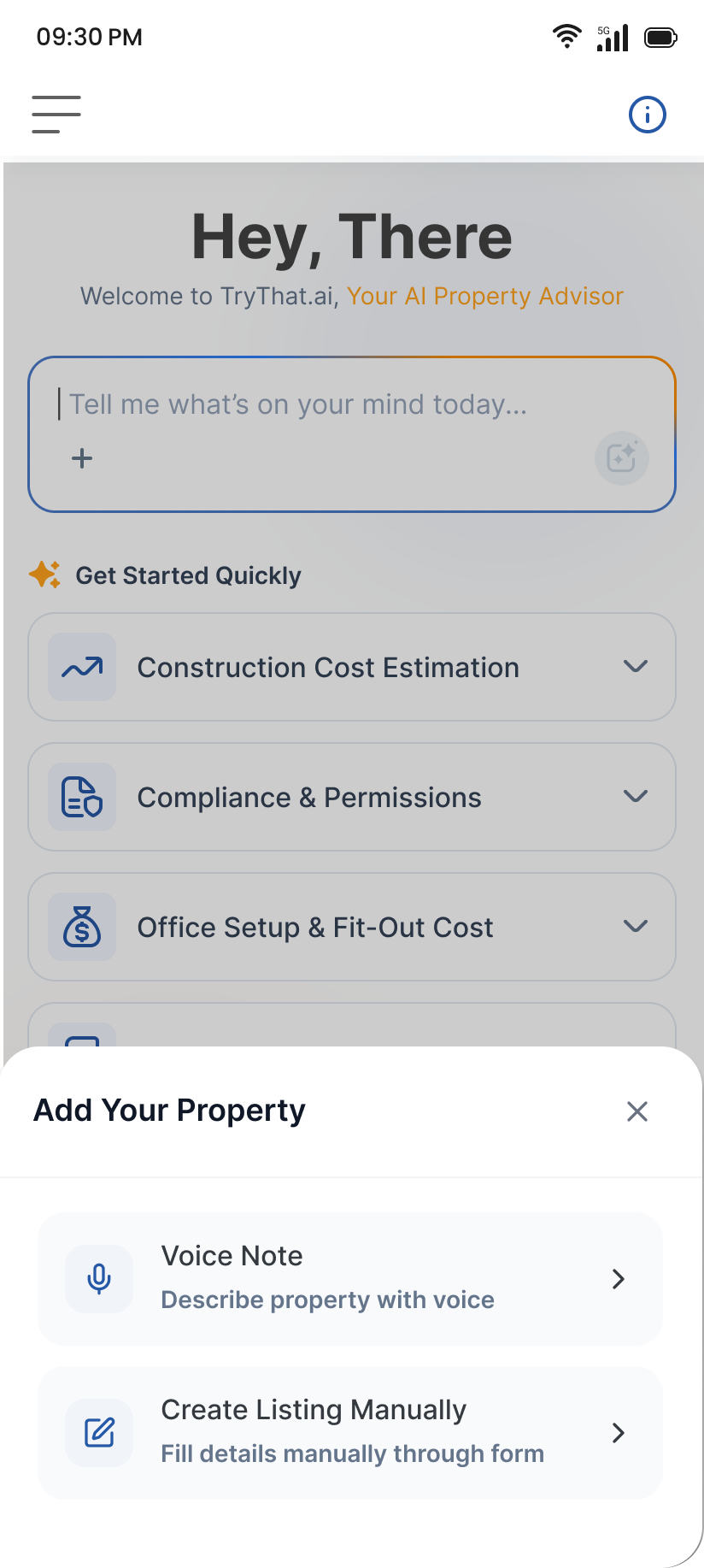
Entry Point
Bottom sheet offers Voice Note or Manual. Voice is the primary, frictionless path
2
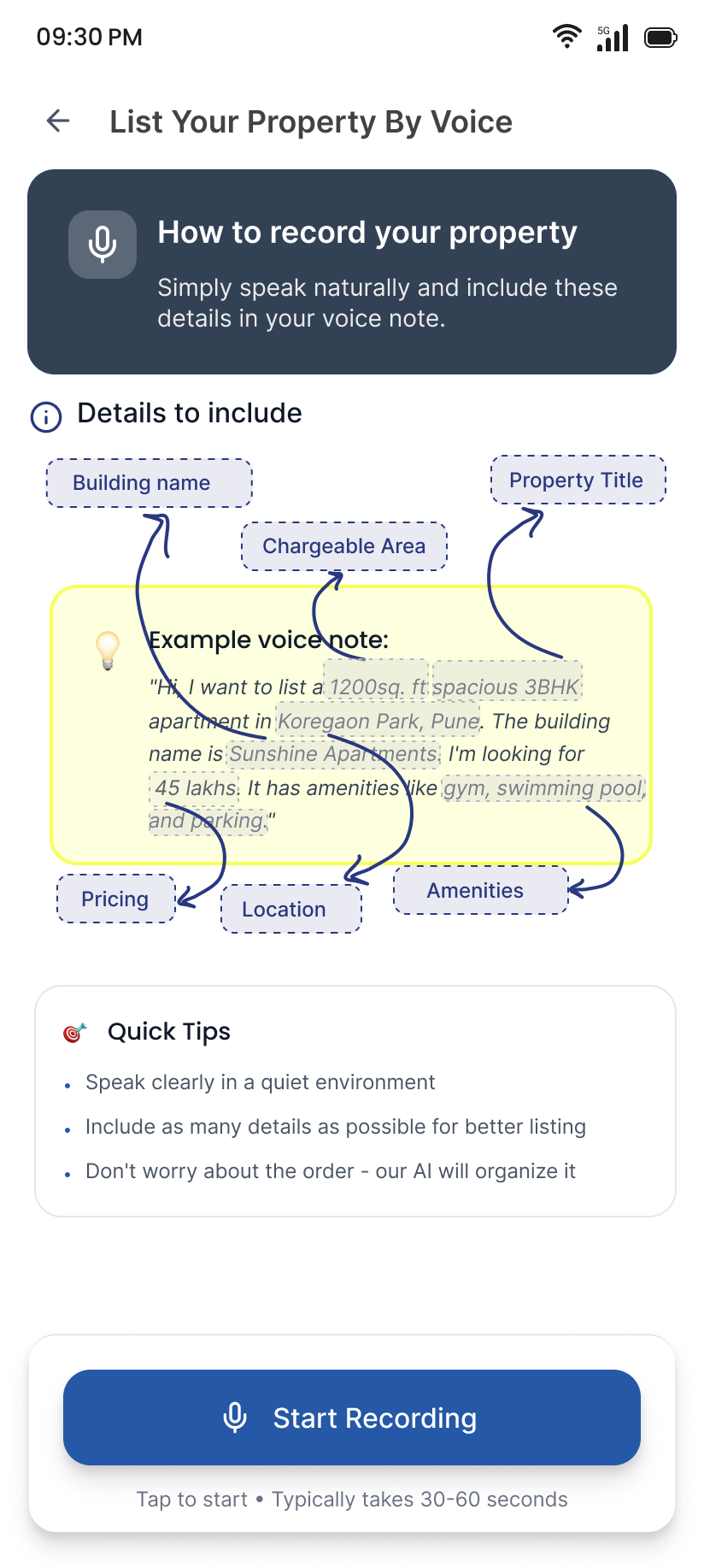
Guided Onboarding
Example voice note and field tags show users exactly what to say
3
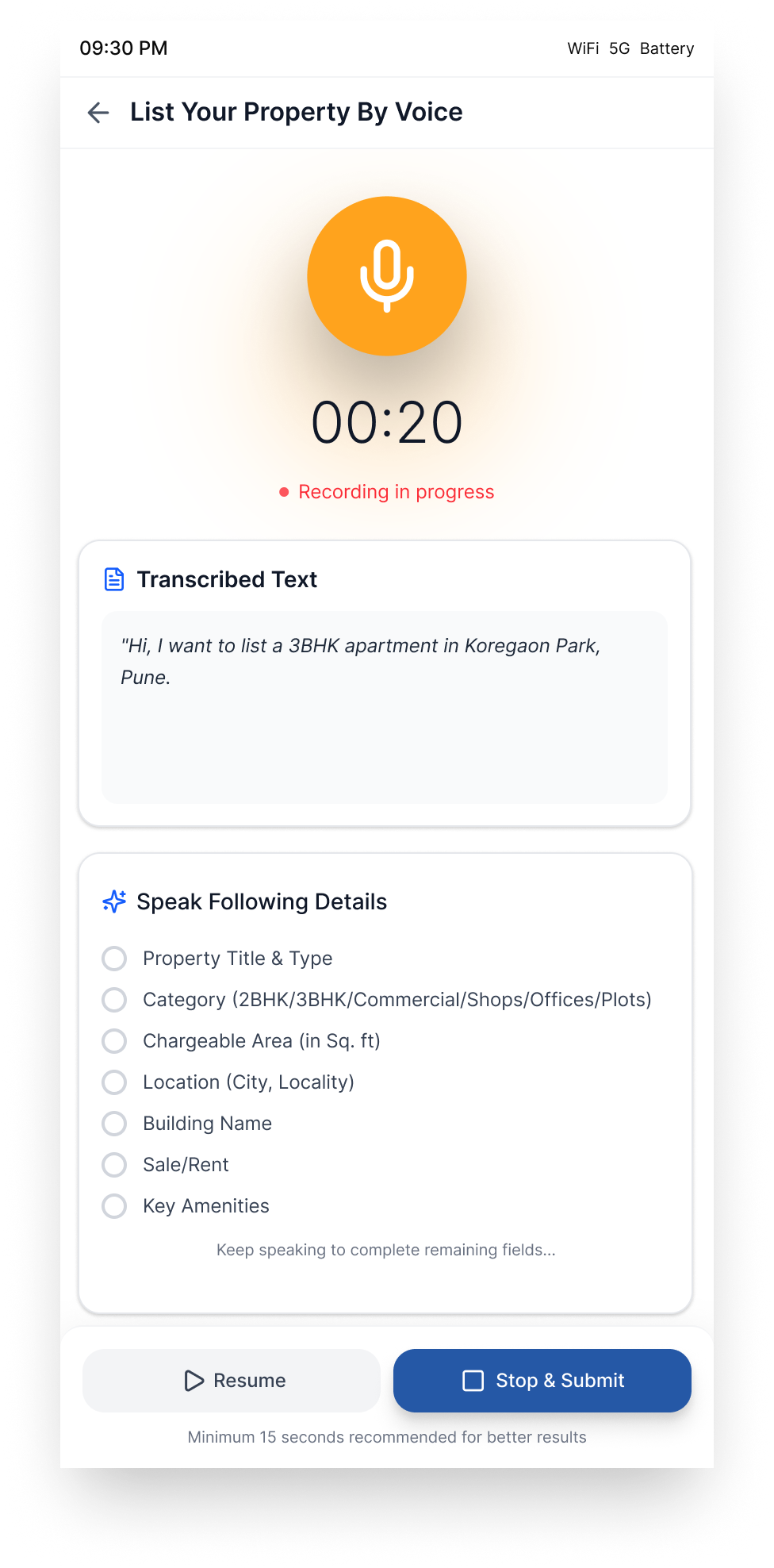
Live Recording
Real-time transcription with a field checklist. Users see progress as they speak
4
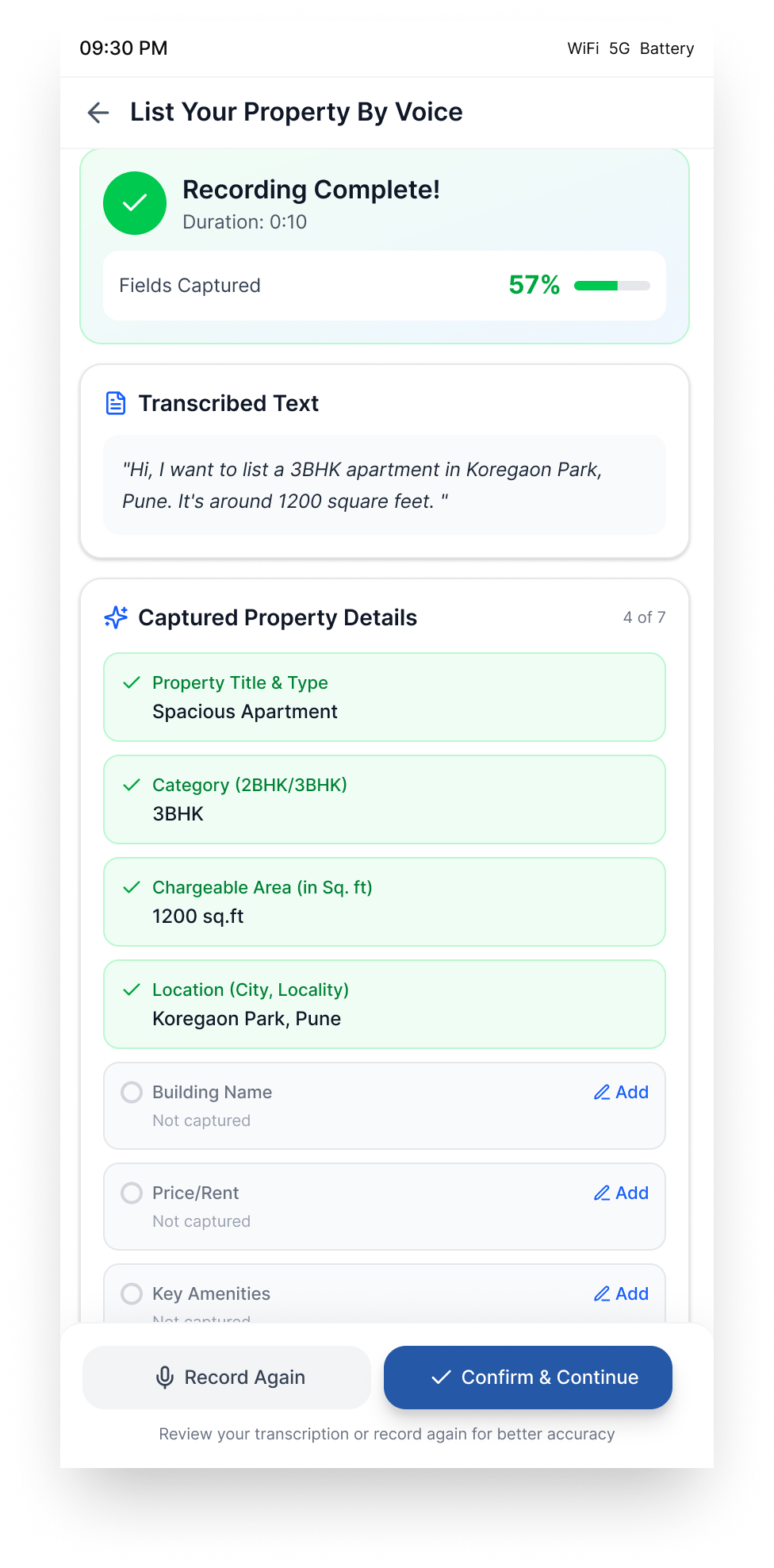
Partial Capture
57% fields captured. Missing fields highlighted, option to record again or fill manually
5
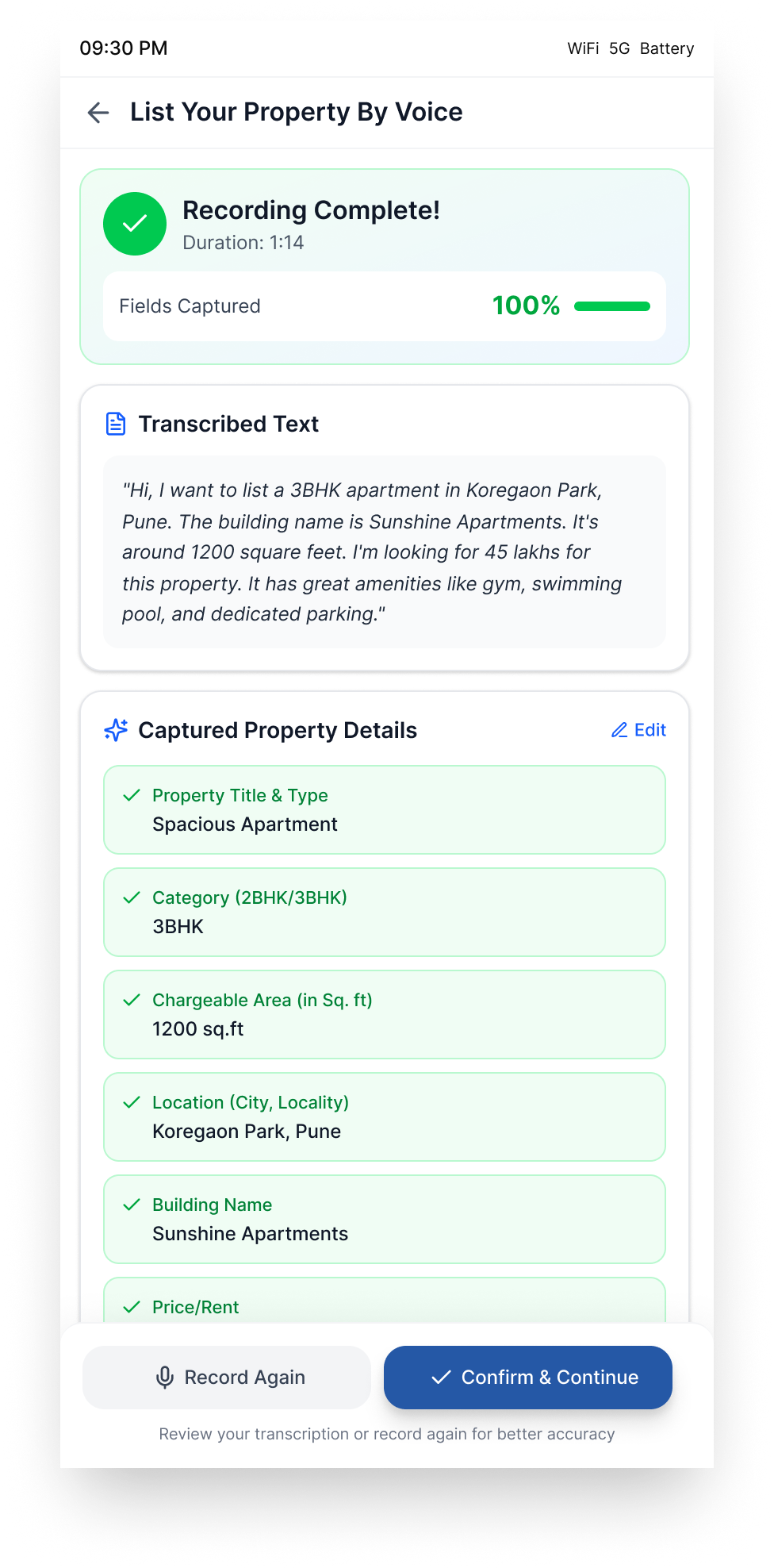
Full Capture
100% fields captured from voice. All property details extracted, ready to confirm
6
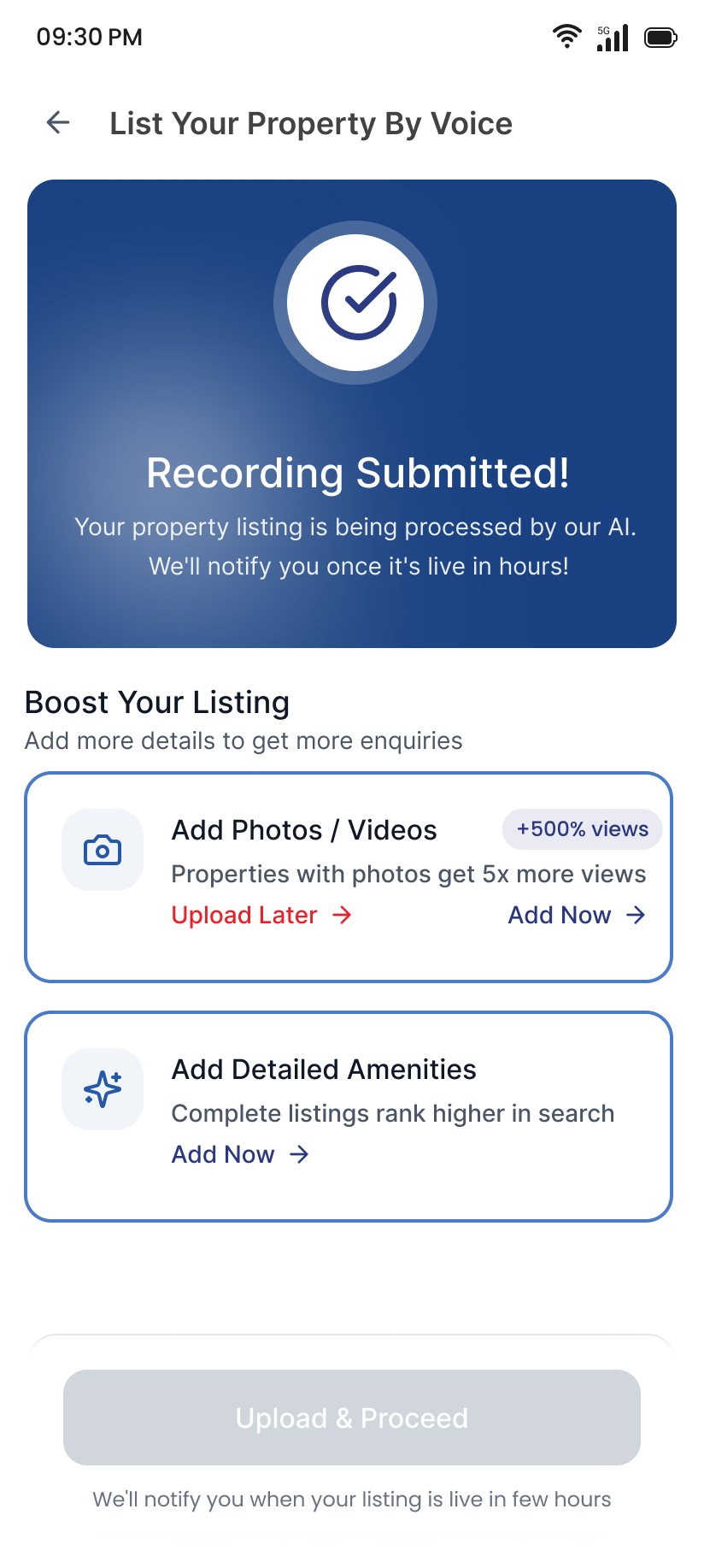
Submitted
Success state with smart upsells: add photos for 5x more views, add amenities to rank higher
My Contribution
AsUI/UXLead,Iowneddesignacrossbothplatforms.BuiltthedesignsysteminFigma:Interfortype,arefinedblue-and-orangepaletteevolvedfromthelegacybrand,structuredtokens,andacomponentlibrarysharedbetweenwebandmobile.Led2designers,randesigncritiques,andsetupreviewprocesseswiththe8-personengineeringteam.IpersonallydesignedtheAIchatexperience,propertydatatables,mobilenavigationarchitecture,andthedesignsystemdocumentation.
08
Impact & Outcomes
Both platforms launched within the 8-month timeline. The mobile app went live on Play Store and App Store, and the web platform was completely rebuilt.
10K+
Play Store downloads
10K+
Active user base
2
Platforms redesigned
Complete
Design system
Reflection
We had no research budget, so we leaned on the sales team. They talked to users every day, and their feedback turned out to be more useful than a formal study would have been. The biggest lesson was that AI-first doesn't mean AI-only. The chat works best alongside structured navigation, not instead of it. People want to browse freely and then ask the AI when they get stuck. If I could redo one thing, I'd have tested the mobile IA with quick prototypes before we committed to building it.